
— News Center
China Steel Mills Raise August Prices, Export Quotes Follow

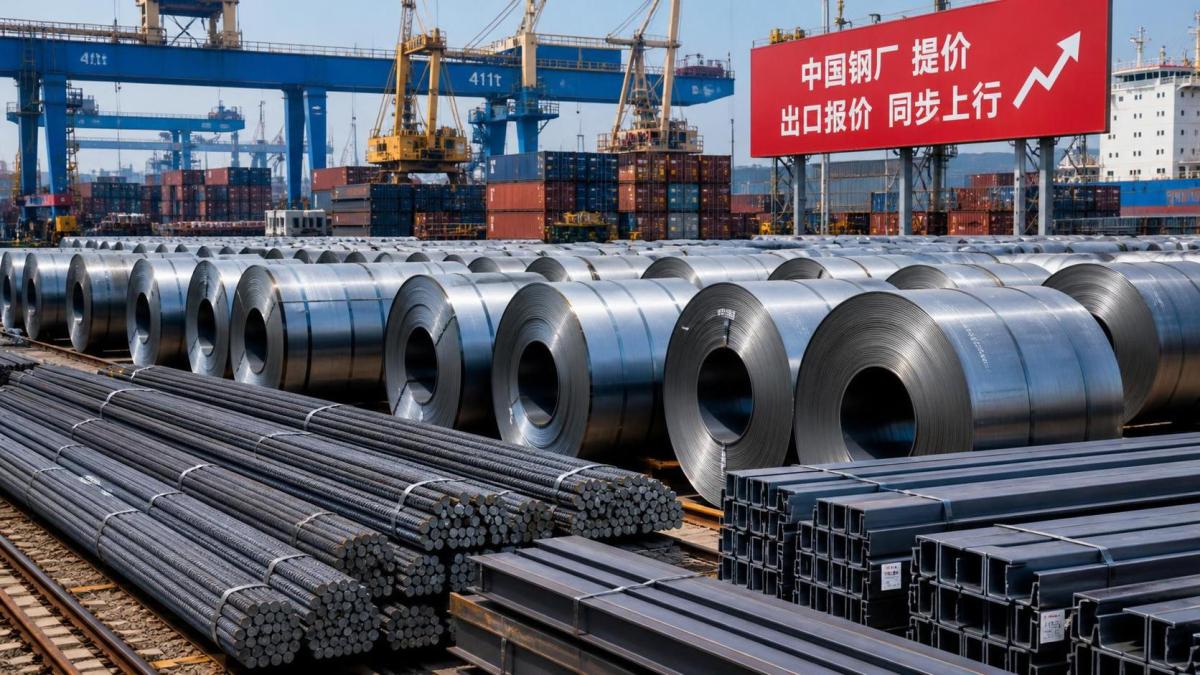
On 2026-08-10, several major Chinese steel mills lifted ex-works prices for key products such as hot-rolled coil and rebar, while export quotations also moved higher in step. From an industry perspective, this is less a routine price note than a signal that purchasing terms, FOB-linked export pricing, and Q3 order-locking decisions may need to be reset by overseas buyers, traders, and downstream users watching China-origin steel supply.
Major mills move pricing higher across core grades
The confirmed market update is straightforward: Baosteel, Shougang, and Ansteel raised ex-works prices by RMB 50 per ton for major products including hot-rolled and rebar on 2026-08-10. Sha Gang’s domestic building-material prices were unchanged, but export quotations had already broadly followed the higher direction. The same update also points to FOB China port steel export quotes being affected, with Tangshan billet spot prices remaining at a high level of RMB 3,000 per ton inclusive of tax at the warehouse-out stage on 2026-08-13.
Where the pricing shift is most likely to be felt
Export traders and FOB sellers
For export traders, the immediate pressure is on quote validity and margin control. When mill offers move up and FOB references adjust, sellers need to check whether existing quotations still reflect current mill pricing, freight assumptions, and shipment timing. Any order already in negotiation may face tighter room for price concessions, especially if the booking window is short.
Overseas importers and procurement teams
Importers are the first group likely to rework Q3 budgets. The relevant issue is not only the higher unit price, but also whether locked-price windows remain open long enough to protect planned arrivals. Procurement teams need to re-check order timing, delivery terms, and whether the current budget still matches the latest FOB level.
Downstream fabricators and distributors
Fabricators and distributors using imported steel may see a wider gap between signed contracts and replacement cost. That affects replenishment planning, resale pricing, and delivery commitments. The key operational point is to confirm whether supplier quotations, product grades, and shipment schedules still align with project demand and inventory targets.
Quality and documentation handlers
Where export pricing changes, document flow often tightens at the same time. Buyers and service providers should pay closer attention to specification sheets, mill test certificates, inspection records, and contract wording tied to grade, size, and shipment date. Even without a formal rule change stated in the source, pricing moves can expose weak points in contract and compliance review.
What companies should watch next
Quote validity and locking terms
The first point to check is whether current offers remain open or need to be reissued. Buyers should confirm validity periods, price adjustment clauses, and whether the pricing basis is linked to mill announcements or port-level export quotations.
Contract wording and supporting documents
For ongoing orders, companies should review the specification language in purchase contracts, the consistency between pro forma invoices and final sales contracts, and the supporting technical documents required for customs, inspection, or customer acceptance. The source does not provide a specific enforcement rule, so this should be treated as a practical risk check rather than a confirmed compliance change.
Shipment timing and supply planning
With billet prices staying elevated and export quotes moving higher, shipment timing becomes more sensitive. Procurement teams may need to compare current offers against planned arrival dates, transit time, and downstream use schedules before deciding whether to lock or delay purchases.
Supplier selection and replenishment strategy
Companies relying on China-origin flat steel or long products should compare mill-level pricing behavior, export quote adjustment speed, and available shipment windows. This is especially relevant for buyers who must keep continuity in replenishment but cannot absorb open-ended price drift.
A signal worth reading as an execution cue
Observably, this update is best understood as a market execution signal rather than a formal policy or regulatory change. It does not announce a new rule, certification threshold, or customs requirement. What it does show is that pricing behavior at major mills has already shifted, and export offers are following. That makes it important for the market to watch how quickly buyers, traders, and logistics-linked service providers adjust their ordering and quotation practices.
From an industry perspective, the main question is not whether the move is large, but whether it changes procurement discipline for Q3. If more offers are re-priced or held for shorter periods, the practical burden shifts to contract management, budget control, and delivery planning.
How to read this update now
The most reasonable reading is that this is an active pricing and trade signal with immediate procurement implications. It should not be treated as a finalized policy shift, but it is already relevant for export pricing, budget review, and order-locking decisions. For firms with exposure to China-origin steel, the next step is to track how mill quotes, FOB levels, and buyer response evolve in the coming order cycle.
Source basis and follow-up checks
This article was generated from the user-provided title, event date, and event summary. No specific official source link was provided in the input. For this type of update, relevant source channels would normally include mill announcements, industry association notices, market reporting, customs or trade authority information where applicable, and other authoritative trade or standards publications. The points that still need continued verification are any later quotation revisions, contract execution behavior, shipment terms, and downstream buyer feedback.
By clicking 'Allow All', you agree to the storage of cookies on your device to enhance site navigation, analyze site usage and assist with our marketing efforts.
Leave a message and we'll get back to you soon.