
— News Center
EU Enforces Phase III CBAM for Steel Profiles
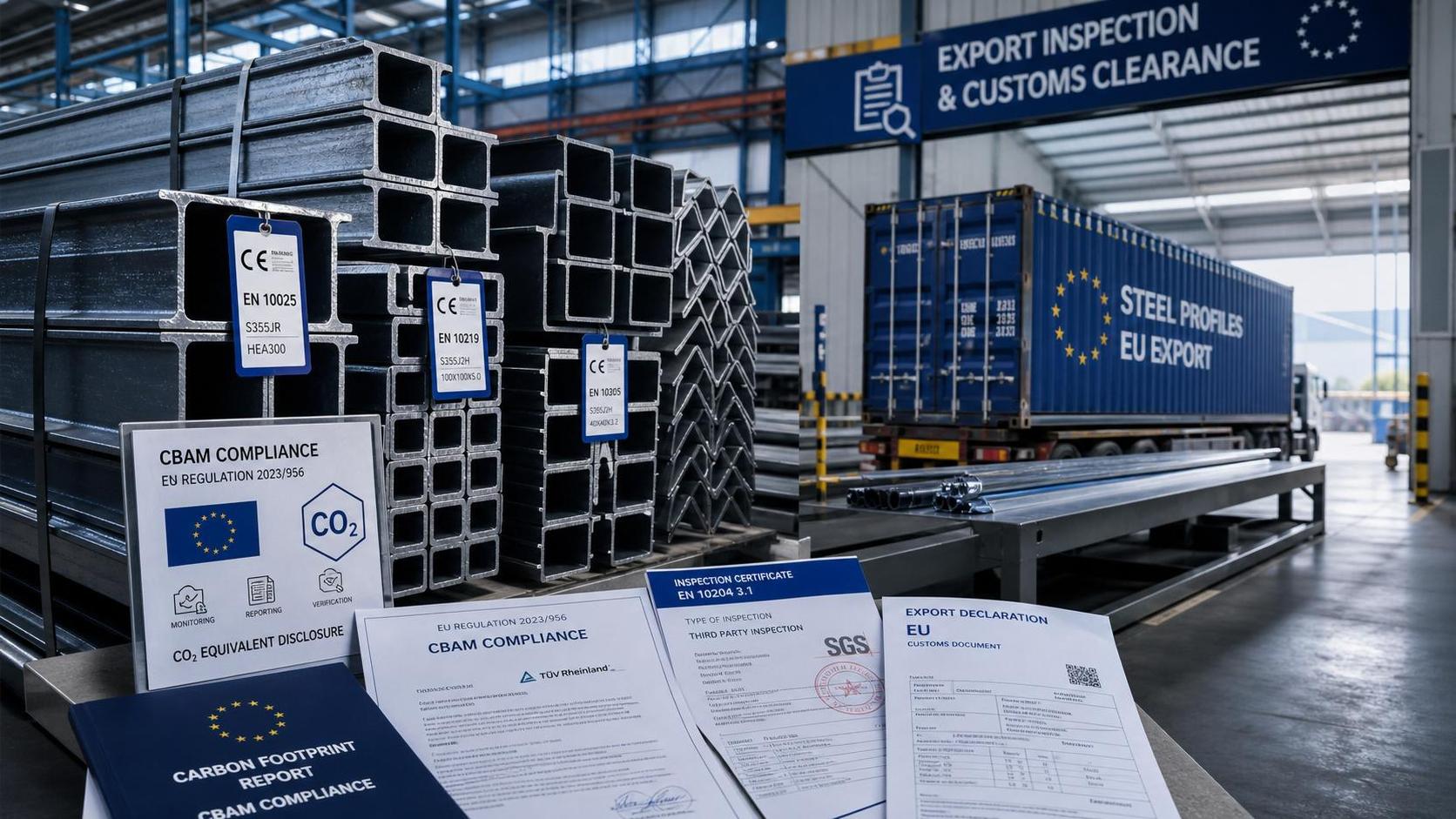
On July 15, 2026, the European Commission formally moved the Carbon Border Adjustment Mechanism (CBAM) for steel products into its third phase, bringing hot-rolled, cold-formed, welded steel profiles and structural steel imports into a stricter pre-clearance reporting stage. For importers, exporters, certification-related service providers, and supply chain teams, the immediate point of attention is that customs processing is now tied to the submission of certified embedded carbon emissions data through the CBAM portal, making carbon data readiness a practical trade and delivery requirement rather than a peripheral compliance issue.
What the new filing requirement now covers
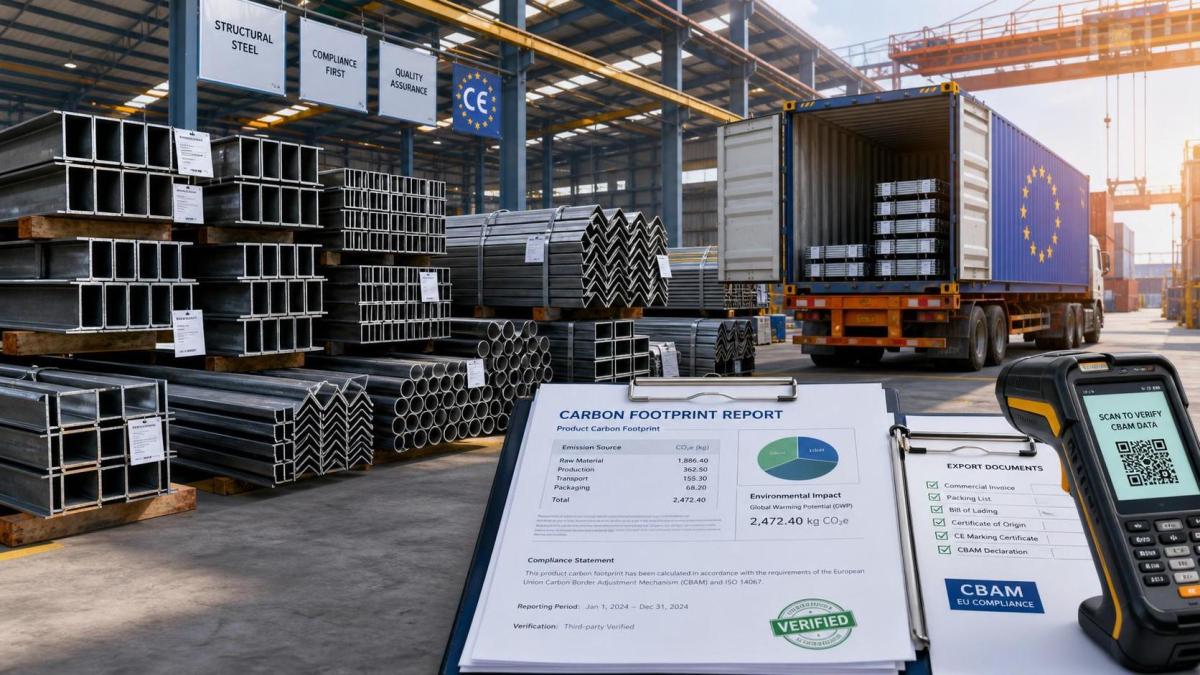
According to the provided information, from July 15, 2026, CBAM entered Phase III for steel products and covers all imports of hot-rolled, cold-formed, welded steel sections, and structural steel materials.
Importers must submit certified embedded carbon emissions data, expressed as tCO₂e/ton, through the CBAM portal before customs clearance.
If the required submission is not completed, the importer may face a penalty set at 120% of the benchmark carbon price.
The provided summary also states that this requirement directly affects the export compliance path, certification cost, and delivery cycle of Asian suppliers, and creates a market-entry barrier for small and medium-sized profile exporters that have not established an LCA database.
Where the pressure is likely to appear across the trade chain
Export transactions now depend more heavily on verified emissions records
From an industry perspective, exporters selling covered steel profiles into the EU market are likely to feel the impact first because customs filing is now linked to certified embedded carbon data. The operational pressure is not limited to document preparation; it also reaches quotation timelines, order confirmation, and shipment scheduling. What deserves closer attention is whether exporters can provide the carbon data package in a form that supports the importer's CBAM portal submission before clearance.
Import-side procurement will need tighter document alignment
For buyers and importers, the rule change increases the need to align procurement decisions with compliance documentation. Analysis shows that supplier selection may be influenced not only by price and product specification, but also by whether the supplier can support certified emissions disclosure. In practice, procurement teams will need to pay closer attention to data completeness, certification status, and the timing risk attached to each shipment.
Certification and testing service providers may face a more practical role in delivery timing
Certification-related firms and testing service institutions may be affected because the new phase requires certified emissions information before customs clearance. Observably, their role is no longer limited to background compliance support; it may become part of the shipment readiness path. Where exporters do not already maintain an LCA database, the time and cost of preparing acceptable documentation may become a direct factor in export feasibility.
Smaller profile suppliers may encounter a higher entry threshold
The provided information explicitly indicates that small and medium-sized exporters without an LCA database face a new barrier to entry. From an industry perspective, this does not automatically mean withdrawal from the market, but it does suggest a sharper compliance threshold for companies that have not yet built internal carbon data management capacity. The likely impact area is the ability to participate in covered export business with predictable lead times.
What companies should watch in current operations
Check whether product scope and shipment documents are fully matched
Analysis shows that companies involved in hot-rolled, cold-formed, welded profiles, and structural steel should first confirm whether their current export items fall within the covered scope described in the provided information. The practical issue is not only classification, but also whether commercial documents, technical documents, and emissions-related records can support a consistent pre-clearance filing path.
Review the readiness of certified emissions data before shipment booking
What deserves closer attention is the sequence of compliance actions. Because the summary states that certified embedded emissions data must be submitted before customs clearance, companies may need to move data collection and certification review earlier in the order process. Where that preparation starts too late, delivery scheduling and customer commitments may come under pressure.
Pay attention to cost transfer and contract allocation
Observably, the requirement may affect how exporters and importers discuss responsibility for certification work, data preparation, and delay risk. The provided information confirms pressure on certification cost and delivery cycle, so contract teams should pay attention to whether current terms clearly allocate compliance responsibilities and document handover timing.
Track official wording and customer-side execution requests
The input does not provide further operational detail beyond the Phase III filing requirement, scope, and penalty basis. It is therefore more appropriate to treat additional execution details as still requiring follow-up review. Companies should continue watching for customer document requests, tender document changes, and any clearer execution language that may shape how filings are handled in practice.
Why this should be read as an execution signal
Analysis shows that this development is more than a general policy direction and should be understood as a rule entering operational use, because customs clearance is linked to certified embedded emissions submission and a penalty mechanism is already stated in the provided information. At the same time, it would be too early to treat all market effects as settled outcomes. Observably, the larger significance at this stage is that carbon reporting for covered steel profiles is becoming a transaction condition, while the exact market response, documentation practice, and execution rhythm still need continued observation.
How to interpret the current stage of change
From an industry perspective, this update is best understood as a concrete compliance threshold now attached to steel profile imports into the EU rather than as a distant policy signal. The immediate consequence is procedural: certified carbon data now matters to customs timing, supplier qualification, and export readiness. The broader commercial effect, however, still depends on how importers, exporters, and service providers adapt their documentation and delivery processes in response.
Basis of this article and what still requires verification
This article is generated based on the user-provided news title, event date, and event summary. For this type of development, commonly relevant source categories may include official announcements, releases from regulatory authorities, customs or trade administration information, industry association notices, standard-setting documents, and reporting by authoritative media. No specific official source link was provided in the input, so the exact official reference still requires ongoing verification. What also remains worth monitoring includes any further policy detail, certification interpretation, changes in tender or buyer documentation, industry feedback, and how companies implement the requirement in actual export operations.
By clicking 'Allow All', you agree to the storage of cookies on your device to enhance site navigation, analyze site usage and assist with our marketing efforts.
Leave a message and we'll get back to you soon.