
— News Center
Zhongsheng Materials Hot Rolled Steel Review: Thickness, Tolerance, and Finish
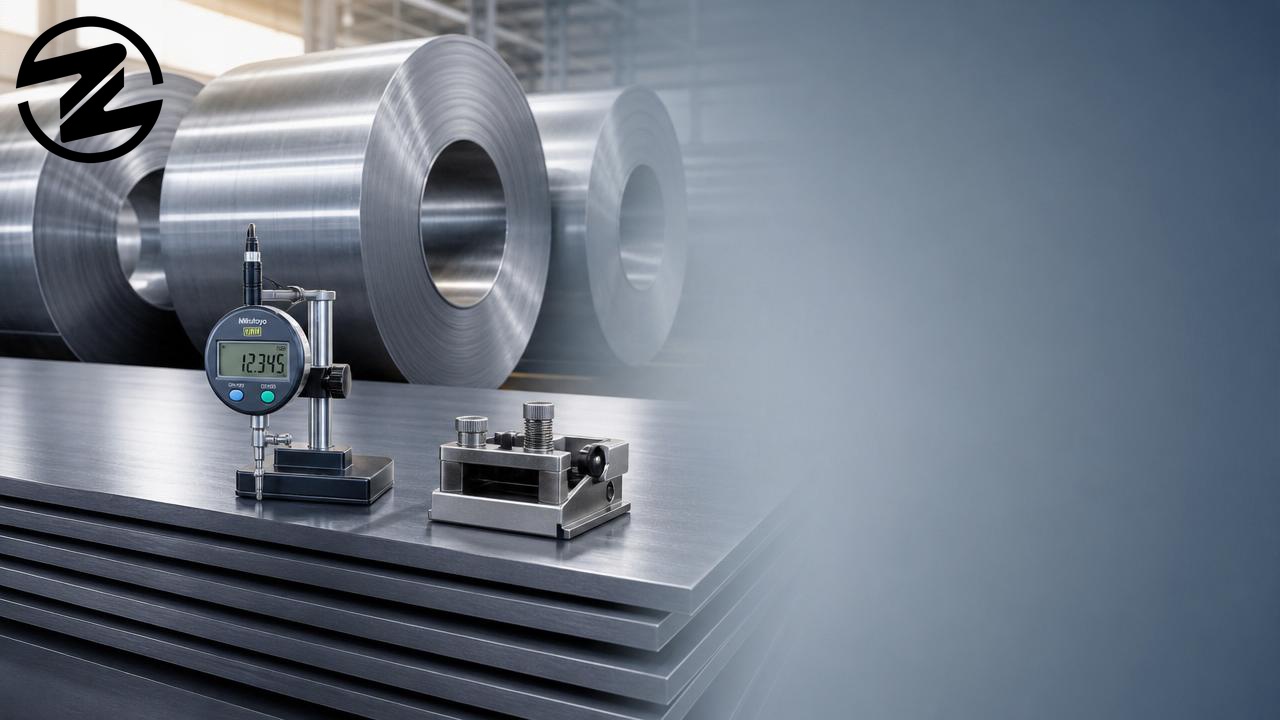
For quality control and safety teams, selecting hot rolled steel is not just about price—it is about consistent thickness, reliable tolerance, and a surface finish that supports downstream processing and structural confidence.
This Zhongsheng Materials hot rolled steel review examines inspection, procurement, and risk evaluation factors before material reaches the workshop or jobsite.
Zhongsheng Materials Hot Rolled Steel Review for Scenario-Based Material Decisions
Hot rolled steel performance depends on how the material is used, processed, stored, and verified after delivery.
A Zhongsheng Materials hot rolled steel review should not stop at nominal grade or listed coil size.
Thickness consistency, dimensional tolerance, and surface condition influence cutting yield, welding stability, forming behavior, and final structural reliability.
Different scenarios also create different inspection priorities. A plate for structural fabrication is judged differently from strip used for bending or profiling.
This Zhongsheng Materials hot rolled steel review focuses on practical judgment instead of abstract specification reading.
When Thickness Becomes the First Risk Indicator
Thickness is often the first measurable sign of hot rolled steel stability.
In heavy fabrication, insufficient thickness may reduce load-bearing margin and complicate compliance verification.
In cutting and nesting operations, excessive variation can reduce yield and create inconsistent part geometry.
A useful Zhongsheng Materials hot rolled steel review checks thickness across multiple positions, not only at the edge or center.
Measurements should cover head, middle, and tail areas when coil-based material is involved.
For plate supply, corner, edge, and central points provide a clearer picture of rolling uniformity.
Thickness Checks for Structural Components
Structural components require predictable section strength, especially when members face bending, compression, or fatigue exposure.
This Zhongsheng Materials hot rolled steel review recommends comparing measured thickness against drawing requirements and accepted steel standards.
If the design relies on minimum thickness, average thickness alone is not a safe approval basis.
The lowest measured value should be recorded and assessed before release to fabrication.
Thickness Checks for Cutting and Profiling
Laser cutting, plasma cutting, and shearing require stable feed behavior and predictable kerf response.
A Zhongsheng Materials hot rolled steel review should confirm whether thickness variation may affect cutting speed or edge quality.
Large variation can also cause uneven bevels, poor fit-up, and additional grinding before welding.
Tolerance Review by Application Scenario
Tolerance is not only a laboratory number. It affects assembly, repeatability, and rework cost.
A Zhongsheng Materials hot rolled steel review should consider dimensional tolerance, flatness, width accuracy, and length deviation.
For welded frames, tolerance affects gap control and fixture loading.
For roll-formed sections, tolerance affects springback and profile symmetry.
For machined parts, tolerance affects stock allowance and machining time.
This Zhongsheng Materials hot rolled steel review highlights one key point: tolerance value matters only when linked to the final process.
Surface Finish Signals That Should Not Be Ignored
Hot rolled steel usually carries mill scale, slight roughness, and visible rolling marks.
These features may be acceptable, but severe pitting, heavy rust, laminations, and deep scratches require attention.
A Zhongsheng Materials hot rolled steel review should separate normal hot rolled appearance from defects that affect processing.
Surface finish becomes critical when coating, painting, galvanizing, or high-quality welding is planned.
Poor surface condition increases blasting time, coating risk, and cleaning cost.
Finish Requirements for Coated Products
Coated products require a surface that can be cleaned to a predictable profile.
If rust is layered or scale is uneven, coating adhesion may become unstable after preparation.
This Zhongsheng Materials hot rolled steel review suggests checking visible oxidation before accepting storage-sensitive steel.
Finish Requirements for Welding
Welding requires clean contact areas and reliable joint preparation.
Scale, oil, moisture, or deep surface flaws can increase porosity and reduce weld consistency.
A Zhongsheng Materials hot rolled steel review should include a weld-zone cleaning assessment when fabrication speed is important.
Typical Application Scenarios and Core Judgment Points
Scenario 1: Heavy Structural Fabrication
Heavy structural work values thickness reliability, stable mechanical properties, and plate flatness.
A Zhongsheng Materials hot rolled steel review should verify whether the steel supports design loads and inspection documentation.
Flatness is especially relevant for beams, base plates, gussets, and welded frame components.
Scenario 2: Bending, Forming, and Section Production
Forming operations need consistent thickness, predictable elongation, and manageable surface scale.
This Zhongsheng Materials hot rolled steel review recommends small trial bends before full production release.
Cracking at the bend line may indicate unsuitable chemistry, poor edge condition, or incorrect forming parameters.
Scenario 3: Cutting, Drilling, and Machining
Cutting and machining scenarios require predictable hardness, surface cleanup allowance, and accurate material dimensions.
A Zhongsheng Materials hot rolled steel review should check whether mill scale will affect tool wear or fixture stability.
If machining allowance is limited, surface defects become more serious.
Scenario 4: Stocking and Distribution
Stocking scenarios emphasize repeatable batches, clear identification, and storage-resistant appearance.
A Zhongsheng Materials hot rolled steel review should compare label information, mill certificates, and random physical checks.
Mixed heats, unclear grade marks, or inconsistent surface conditions increase downstream claim risk.
Different Scenarios Require Different Acceptance Priorities
One acceptance standard cannot cover every steel usage scenario equally well.
This Zhongsheng Materials hot rolled steel review uses scenario weighting to help define practical inspection focus.
- Load-bearing parts: prioritize minimum thickness, grade verification, and flatness.
- Bending parts: prioritize elongation, edge quality, and thickness stability.
- Coated parts: prioritize rust level, scale uniformity, and cleaning feasibility.
- Machined parts: prioritize allowance, hardness consistency, and defect depth.
- Resale stock: prioritize traceability, appearance consistency, and batch separation.
A practical Zhongsheng Materials hot rolled steel review combines documents, tools, and process trials.
The goal is not only to pass inspection, but to prevent avoidable rework later.
Scene-Fit Recommendations Before Release to Production
Before production release, the steel should be judged against the actual process path.
A Zhongsheng Materials hot rolled steel review can follow a simple staged approach.
- Confirm grade, heat number, specification, and certificate consistency.
- Measure thickness at multiple positions and record the lowest value.
- Check flatness, width, length, and edge condition.
- Inspect surface for rust, pits, laminations, oil, and scratches.
- Run process trials for bending, welding, cutting, or coating when needed.
- Separate questionable material until acceptance decisions are documented.
This method makes the Zhongsheng Materials hot rolled steel review easier to repeat across different orders.
It also creates evidence when supplier communication or internal approval is required.
Common Misjudgments in Hot Rolled Steel Evaluation
Several mistakes often appear during hot rolled steel evaluation.
The first mistake is trusting nominal thickness without checking actual measurements.
The second mistake is treating all surface scale as harmless.
The third mistake is ignoring flatness until assembly or welding fixtures expose the problem.
A Zhongsheng Materials hot rolled steel review should also avoid judging one sample as an entire batch.
Sampling should reflect shipment size, coil position, and visible condition differences.
- Do not ignore edge cracks before bending.
- Do not overlook moisture marks during long storage.
- Do not assume certificate data replaces physical inspection.
- Do not approve material before process-critical trials.
These points strengthen any Zhongsheng Materials hot rolled steel review and reduce hidden production risk.
Practical Conclusion and Next Evaluation Steps
A strong hot rolled steel decision requires more than comparing price and grade name.
Thickness, tolerance, and finish must be judged according to the final application scenario.
This Zhongsheng Materials hot rolled steel review shows that acceptance should be practical, measurable, and process-linked.
The next step is to build a checklist for the intended use, then match inspection depth to risk level.
For critical work, combine document review, dimensional inspection, surface assessment, and controlled production trials.
Used correctly, a Zhongsheng Materials hot rolled steel review supports safer fabrication, smoother processing, and more confident material approval.
By clicking 'Allow All', you agree to the storage of cookies on your device to enhance site navigation, analyze site usage and assist with our marketing efforts.
Leave a message and we'll get back to you soon.