
— News Center
EU CBAM Charges Begin for Steel Exports

On July 1, 2026, the EU Carbon Border Adjustment Mechanism (CBAM) moved from its transition period into the charging stage for steel and key steel sections, including products such as H-beams, angle steel, and channel steel. For Chinese exporters shipping these products to the EU, the change turns carbon data submission from a reporting matter into a direct trade compliance requirement. It matters not only to exporters, but also to importers, procurement teams, customs-facing operations, and supplier approval processes, because incomplete or non-compliant declarations may affect clearance timing, delivery arrangements, and purchasing decisions.
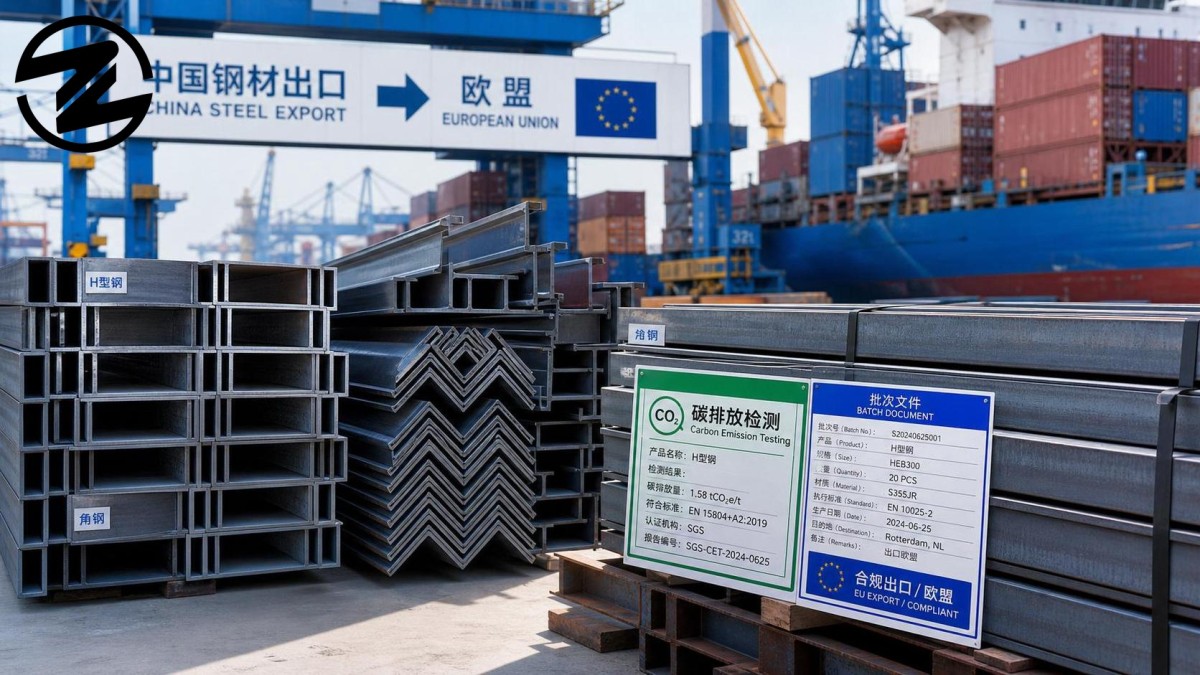
What Has Changed in Cross-Border Steel Shipments
According to the provided information, the CBAM transition period ended on July 1, 2026, and steel together with major steel section products formally entered the implementation stage for charges. Chinese steel companies exporting to the EU are required to submit the embedded carbon emissions for each batch of products through the CBAM registration system, along with a third-party verification report.
The confirmed compliance consequence stated in the input is that failure to declare in line with the requirement may lead to customs clearance delays or refusal of goods. The same information also states that this requirement directly affects overseas importers in terms of clearance cost, procurement lead time, and supplier admission assessment.
Where the Pressure Appears Along the Supply Chain
Export transactions now depend on batch-level carbon documentation
For exporters of steel sections to the EU, the immediate impact is on shipment preparation and trade documentation. The requirement is not limited to product movement itself; it is tied to batch-by-batch embedded emissions data and third-party verification. From an industry perspective, this means export execution may increasingly depend on whether supporting carbon information can be prepared in step with shipment schedules.
Importers and procurement teams face a tighter supplier screen
For overseas importers and buyers, the reported change affects more than customs filing. Analysis shows that procurement decisions may be influenced by a supplier's ability to provide compliant emissions data and verification materials on time. Supplier access is therefore linked not only to price and specification, but also to document readiness and compliance reliability.
Logistics and delivery coordination may become more document-sensitive
For supply chain service providers and delivery coordinators, the risk point is the connection between customs handling and missing or non-compliant declarations. Observably, even where product manufacturing is complete, shipment flow may still be disrupted if the required reporting package is incomplete. What deserves closer attention is the alignment between export paperwork, customs timing, and buyer-side receiving arrangements.
What Companies Should Watch in Day-to-Day Execution
Check whether product scope and shipment batches are being reviewed correctly
Companies dealing in H-beams, angle steel, channel steel, and related steel products should closely review whether the goods they ship to the EU fall within the affected scope described in the provided information. In practice, attention should be placed on how each batch is identified and matched with the required emissions submission.
Prepare emissions records and third-party verification in parallel
The confirmed requirement includes both embedded carbon emissions data and a third-party verification report. Analysis shows that companies should pay attention to whether these two elements are prepared on the same timeline, because a mismatch between shipment readiness and verification readiness could create avoidable delivery friction.
Reassess procurement schedules and customer commitments
Because the provided information links non-compliant declarations to clearance delays or refusal of goods, exporters and buyers should pay attention to delivery windows, purchase timing, and contractual coordination. It is more appropriate to understand this as an operational compliance issue that may affect lead-time planning, rather than as a paperwork formality.
Track how supplier approval standards evolve
The input states that overseas importers' supplier admission assessment is directly affected. From an industry perspective, companies should watch for changes in customer document requests, qualification reviews, and procurement file requirements. Where execution details are not yet provided in the input, this remains an area for continued monitoring rather than a confirmed uniform practice.
Why This Looks More Like an Execution Signal Than a Policy Reminder
Analysis shows that this development is better understood as a live compliance threshold for steel trade with the EU, rather than a general policy headline. The transition period ending on a specified date and the requirement for batch-level emissions reporting with third-party verification both point to practical implementation. At the same time, the provided information does not include detailed enforcement procedures, documentary formats, or sector-by-sector interpretation, so market participants still need to watch how execution language is applied in customs handling, procurement files, and supplier review.
How to Read This Development at the Current Stage
At this stage, the most balanced reading is that the CBAM requirement for steel and key steel sections has moved into a directly actionable compliance phase for exporters serving the EU market. The immediate significance lies in documentation, customs processing, procurement coordination, and supplier qualification. It is more appropriate to understand this as a rule now affecting transaction execution, while still recognizing that the finer points of implementation and market response require ongoing observation.
Basis of This Article and What Still Needs Verification
This article is based on the user-provided news title, event date, and event summary. For developments of this kind, commonly relevant source categories may include official announcements, regulatory releases, customs or trade authority information, industry association updates, standard-setting documents, and reporting by authoritative media. No specific official source link was provided in the input, so further verification remains necessary. Areas that still require continued observation include detailed implementation language, compliance interpretation, documentation expectations in procurement and tender files, market feedback, and how companies carry out the requirement in practice.
By clicking 'Allow All', you agree to the storage of cookies on your device to enhance site navigation, analyze site usage and assist with our marketing efforts.
Leave a message and we'll get back to you soon.