
— News Center
EU CBAM Charges Start for Steel Profiles
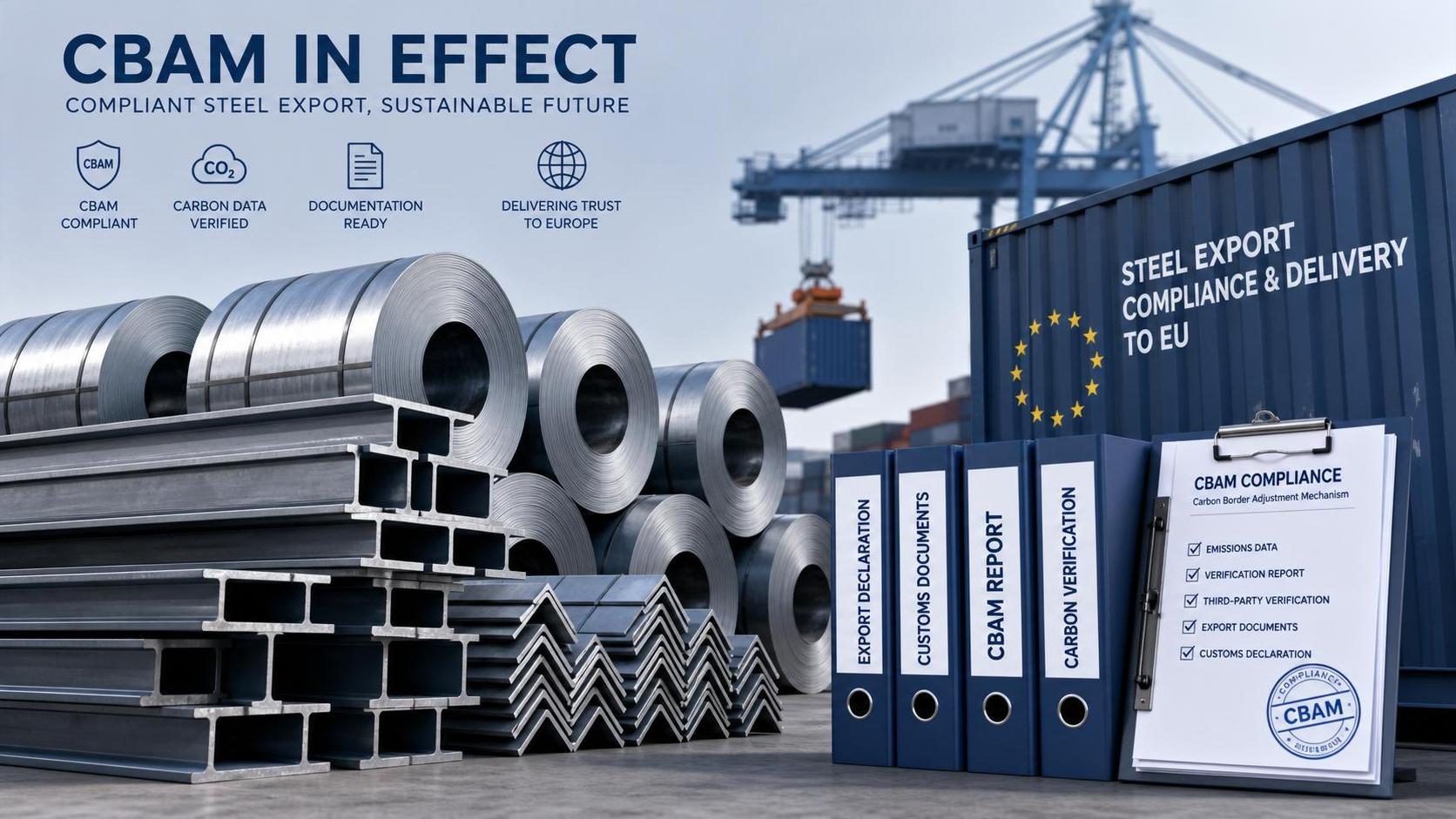
On July 1, 2026, the EU Carbon Border Adjustment Mechanism entered its formal charging phase for key steel profile products including hot-rolled coils, H-beams, and angle steel. For Chinese exporters serving the EU market, this is not only a tax-related development but also a practical compliance change tied to quarterly carbon emissions reporting and third-party verification through the EU CBAM portal. What deserves closer attention is the effect on customs handling, delivery timing, and contract execution across export, procurement, and supply chain coordination.
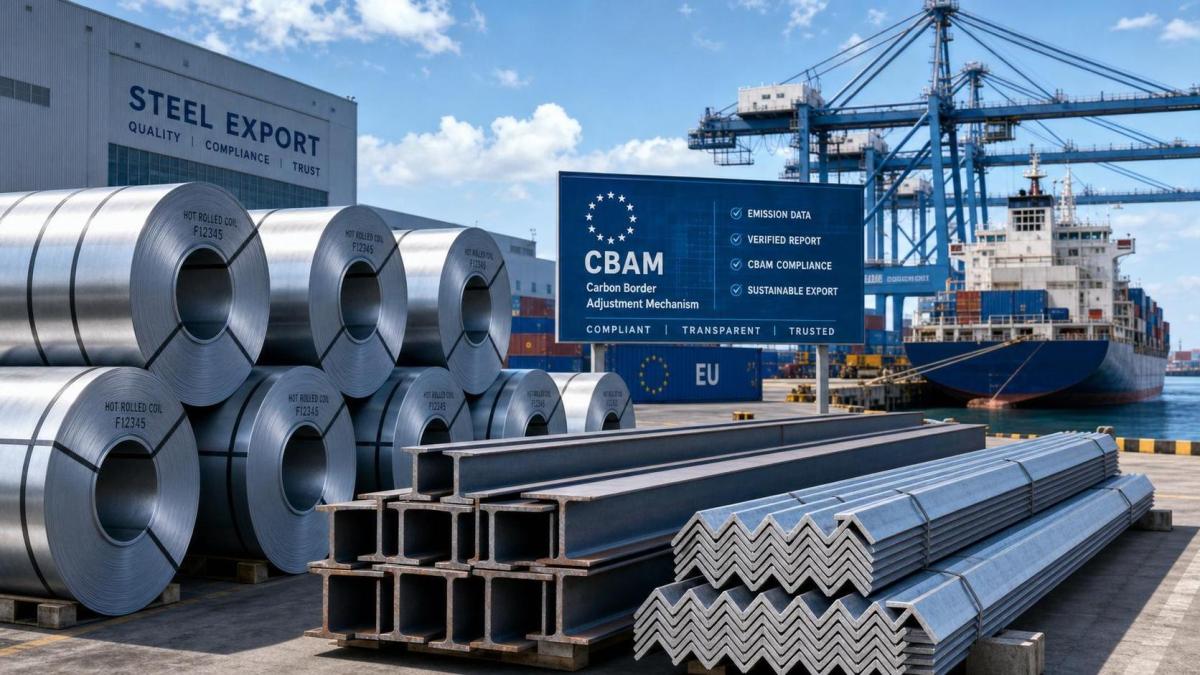
What Has Now Taken Effect for Steel Exports
The confirmed event is that, from July 1, 2026, the EU CBAM formally begins its charging stage for major steel profile products such as hot-rolled steel coils, H-beams, and angle steel. Exporters are required to submit quarterly declarations through the EU CBAM portal covering embedded carbon emissions for the products concerned, together with third-party verification reports. The provided event summary also states that non-compliant reporting may lead to customs clearance delays and additional costs, with direct consequences for delivery schedules and contract performance for Chinese steel exporters.
Where the Operational Pressure Is Likely to Appear
Export shipments now face a document-driven compliance step
From an industry perspective, exporters are the first group likely to feel the change because the reporting obligation is directly linked to shipment compliance. The main pressure point is no longer limited to price or product specification; it also extends to whether carbon emissions data and verification materials can be prepared and filed on time. For businesses shipping covered steel profiles, attention is likely to shift toward reporting readiness, document completeness, and coordination between shipment plans and quarterly declaration cycles.
Manufacturing and processing teams may be drawn into emissions data preparation
Analysis shows that manufacturers and processors involved in covered steel products may be affected because exporters cannot complete declarations without product-level carbon information and supporting records. The operational impact is likely to appear in internal data collection, technical documentation, and the handoff of emissions-related information needed for third-party verification. Even where the legal filing action sits with the exporter, upstream production participants may still become part of the compliance chain.
Procurement and supply chain coordination become more time-sensitive
For procurement teams and supply chain service providers, the reported risk of customs delays and extra charges means delivery planning may become less flexible. Buyers, logistics coordinators, and contract managers may need to pay closer attention to whether covered products are supported by the required emissions declarations and verification documents before dispatch. In practice, that can affect shipment scheduling, supplier coordination, and delivery commitments tied to export contracts.
Verification-related service roles may see higher compliance relevance
The event summary specifically refers to third-party verification reports, which means verification-related service providers may become more relevant to export execution. Observably, the key issue is not simply the existence of a reporting duty, but whether supporting verification can be completed in a form and timing acceptable for filing. Companies relying on external verification support are therefore likely to watch lead times, document standards, and filing coordination more closely.
What Companies Should Monitor Immediately
Check whether covered product lines are already within the reporting workflow
Analysis shows that companies handling hot-rolled coils, H-beams, angle steel, and similar steel profiles should first confirm whether those product lines are already mapped into an internal CBAM reporting process. The immediate practical issue is not broad strategy but whether the relevant export items are connected to a workable flow for emissions data preparation, verification, and quarterly submission.
Review the readiness of emissions records and verification files
What deserves closer attention is the completeness of the supporting materials behind each declaration. Since the event summary confirms the need for embedded carbon emissions reporting and third-party verification reports, companies should monitor whether technical records, product-related emissions information, and verification documents can be assembled in line with shipment and filing timelines. Where execution details are not provided in the input, this should be treated as a monitoring priority rather than an established operating outcome.
Reassess delivery commitments tied to EU-bound contracts
Because the confirmed risk includes customs clearance delays and additional fees in cases of non-compliant reporting, exporters and contract managers may need to revisit delivery assumptions for EU-bound orders. Observably, this matters most where delivery windows are tight or where contract performance depends on predictable customs release. The current signal is that compliance timing may now affect commercial execution more directly than before.
Keep watching for filing practice and implementation language
It is more appropriate to understand this stage as an implemented compliance requirement with further execution detail still worth monitoring. Companies should therefore keep track of how filing practice, documentation expectations, and market-side implementation are expressed in operational communications, transaction documents, and counterpart requirements. The input does not provide full procedural detail, so firms should avoid assuming that all practical questions have already been settled.
Why This Reads as an Execution Signal, Not Just a Policy Headline
Analysis shows that this development is more than a general policy update because it is tied to a formal charging phase, a defined reporting channel, and a stated compliance consequence. That combination gives it the character of an execution signal for steel exporters rather than a distant regulatory discussion. At the same time, it would be premature to treat all market effects as fully established, because the input does not provide broader enforcement detail, transaction practice, or downstream buyer response. The more balanced reading is that a real compliance threshold is now active, while implementation patterns still need observation.
How This Development Is Best Understood Now
At this stage, the event is best understood as a concrete rule transition affecting export operations for covered steel profile products. The immediate significance lies in the connection between carbon reporting, third-party verification, customs handling, and delivery reliability. From an industry perspective, the most reasonable conclusion is not that every commercial outcome is already fixed, but that compliance preparation has become part of routine export execution for affected shipments.
Basis of This Article and What Still Needs Verification
This article is generated based on the user-provided news title, event time, and event summary. For this type of development, relevant source categories would typically include official announcements, regulator releases, customs or trade authority information, industry association updates, standard-setting documents, and reporting from established trade media. No specific official source link was provided in the input, so the exact official reference remains to be verified. Further observation is still needed on implementation details, verification practice, filing interpretation, changes in commercial documents, industry feedback, and how affected companies are executing compliance in practice.
By clicking 'Allow All', you agree to the storage of cookies on your device to enhance site navigation, analyze site usage and assist with our marketing efforts.
Leave a message and we'll get back to you soon.