
— News Center
US Starts Hot-Rolled Coil Circumvention Probe

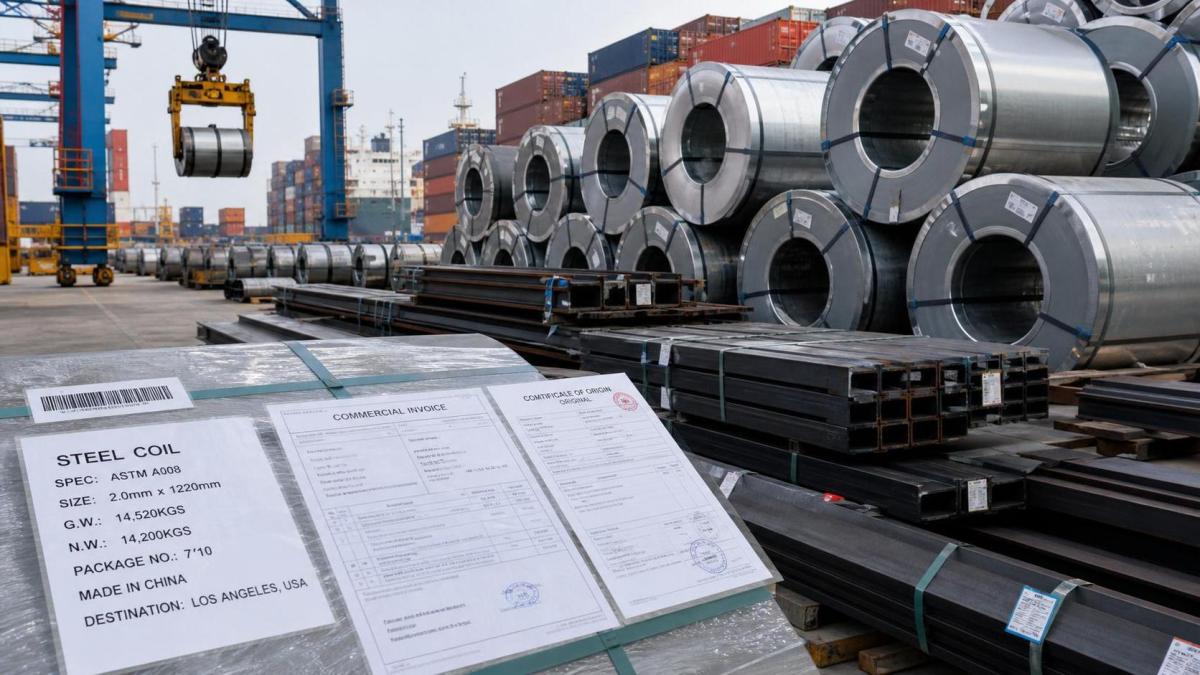
On July 6, 2026, the U.S. Department of Commerce announced a circumvention investigation involving hot-rolled steel coil of Chinese origin, including products under HS 7208, 7211, and 7225, with scrutiny extending to shipments routed through Vietnam, Malaysia, and Mexico. For companies clearing goods into the U.S. market, the immediate change is procedural as much as legal: importers and Chinese exporters are required to submit a complete supply chain declaration and proof of origin within 72 hours, or face cargo detention and a 300% temporary cash deposit requirement. For exporters of profiles, structural steel, and downstream processed products, this deserves close attention because the effect is likely to appear first in customs timing, document readiness, and compliance cost rather than only in pricing.
What the announced measure clearly covers
The confirmed facts are limited but material. The U.S. Department of Commerce stated on July 6, 2026 that it had formally launched an anti-circumvention investigation concerning hot-rolled steel coil originating in China. The products referenced include HS 7208, 7211, and 7225. The announced focus includes products transshipped through Vietnam, Malaysia, and Mexico. The stated requirement is that all importers clearing the relevant goods in the United States and Chinese exporters must provide a complete supply chain declaration together with proof of origin within 72 hours. The stated consequence for failure to provide those materials is cargo detention and a 300% temporary cash deposit. The action directly affects customs clearance timing and compliance costs for exporters of profiles, structural steel, and downstream processed steel products.
Where the pressure is likely to appear first
Export transactions tied to U.S. clearance
From an industry perspective, exporters shipping relevant steel products into the U.S. market may be affected first at the documentation stage. The reason is straightforward: the new 72-hour submission requirement places pressure on origin records, supply chain traceability, and the consistency of shipping documents. The operational impact is likely to concentrate in pre-shipment review, customs coordination, and the ability to assemble origin evidence quickly enough to support clearance.
Processors using hot-rolled coil as an input
Processors making profiles, structural steel, or downstream steel products may also face indirect disruption. Analysis shows that even where the finished export is the commercial focus, the traceability of the underlying hot-rolled coil becomes more important once the investigation turns to supply chain declarations and origin proof. What deserves closer attention is whether procurement files, mill-origin records, and product mapping by HS category are organized well enough to support customer, broker, or importer requests on short notice.
Importers and supply chain service providers
For importers, customs brokers, logistics coordinators, and related supply chain service providers, the main risk is procedural delay. The announced rule change does not simply raise a tariff issue; it creates a fast-response compliance burden at the point of entry. In practice, these parties will need to pay attention to declaration completeness, documentary alignment across commercial and logistics records, and the timing of communication between exporter and U.S. clearance teams.
Buyers managing delivery schedules
Procurement teams and buyers relying on affected steel products may need to reassess delivery assumptions. Observably, when a shipment can be detained for missing or incomplete origin documentation, the issue extends beyond trade compliance into delivery planning and project sequencing. The practical concern is less about market theory and more about whether contractual schedules, stock planning, and supplier document readiness remain aligned under a tighter review environment.
What companies should check now
Document chains that can withstand a 72-hour deadline
Analysis shows that the shortest-term priority is not broad strategy but file readiness. Companies connected to the covered trade flow should review whether origin documents, supply chain declarations, and supporting commercial records can be assembled quickly and consistently. Where documents exist across multiple parties, the response speed may matter as much as the documents themselves.
Exposure in routed or multi-country shipments
Because the announced investigation specifically highlights shipments routed through Vietnam, Malaysia, and Mexico, companies involved in multi-country logistics should pay closer attention to transaction paths, processing steps, and origin representations used in trade paperwork. This should be understood as a compliance review issue, not merely a logistics issue, especially where routing structures may invite additional scrutiny.
Product classification and supporting technical files
For products linked to HS 7208, 7211, and 7225, businesses should verify whether internal product classification, product descriptions, and technical files are consistent across sales, shipping, and customs records. Where downstream processed goods depend on hot-rolled coil inputs, supporting files may become relevant to demonstrating traceability and origin in a way that affects release timing.
Delivery commitments and customer communication
It is more appropriate to understand this development as a trigger for tighter delivery-risk management. Companies with active U.S.-bound orders may need to monitor whether customs timing assumptions, customer notice procedures, and shipment release expectations still match the new compliance burden. The input provided does not confirm how enforcement will evolve beyond the announced requirements, so this remains an area to watch rather than a settled execution outcome.
How this signal should be read at this stage
Observably, this development is more than a routine trade headline because it combines an investigation with an immediate documentation deadline and a stated financial consequence for non-compliance. At the same time, it should not be overstated as a fully settled market outcome. Based on the confirmed facts, this is best read as a clear enforcement signal that raises the importance of origin substantiation and supply chain transparency in the affected steel trade. Further industry interpretation still depends on how consistently the requirement is applied in practice, how parties prepare documentation, and whether related business documents begin to change in response.
Why the market is likely to keep watching this case
From an industry perspective, the significance of this event lies in execution risk. The announced action directly links anti-circumvention review to customs timing, documentary burden, and temporary financial exposure. For businesses in profiles, structural steel, and downstream processed exports, the immediate takeaway is not that every commercial outcome has already changed, but that compliance readiness has become a more active part of shipment planning. At this stage, it is more appropriate to understand the announcement as an implemented enforcement signal with follow-on effects that still require observation.
Basis of this article and what still needs verification
This article is based on the user-provided news title, event date, and event summary. For developments of this kind, relevant source categories typically include official announcements, releases from regulatory authorities, customs or trade administration information, industry association updates, standard-setting documents, and reporting by authoritative media. A specific official source link was not provided in the input, so the precise official publication path still requires verification. What still merits ongoing observation includes later official clarifications, enforcement interpretation, documentary expectations in practice, changes in tender or procurement documentation, industry feedback, and how affected companies implement the stated requirements.
By clicking 'Allow All', you agree to the storage of cookies on your device to enhance site navigation, analyze site usage and assist with our marketing efforts.
Leave a message and we'll get back to you soon.