
— News Center
EU Starts CBAM Reporting Duty for Steel Imports

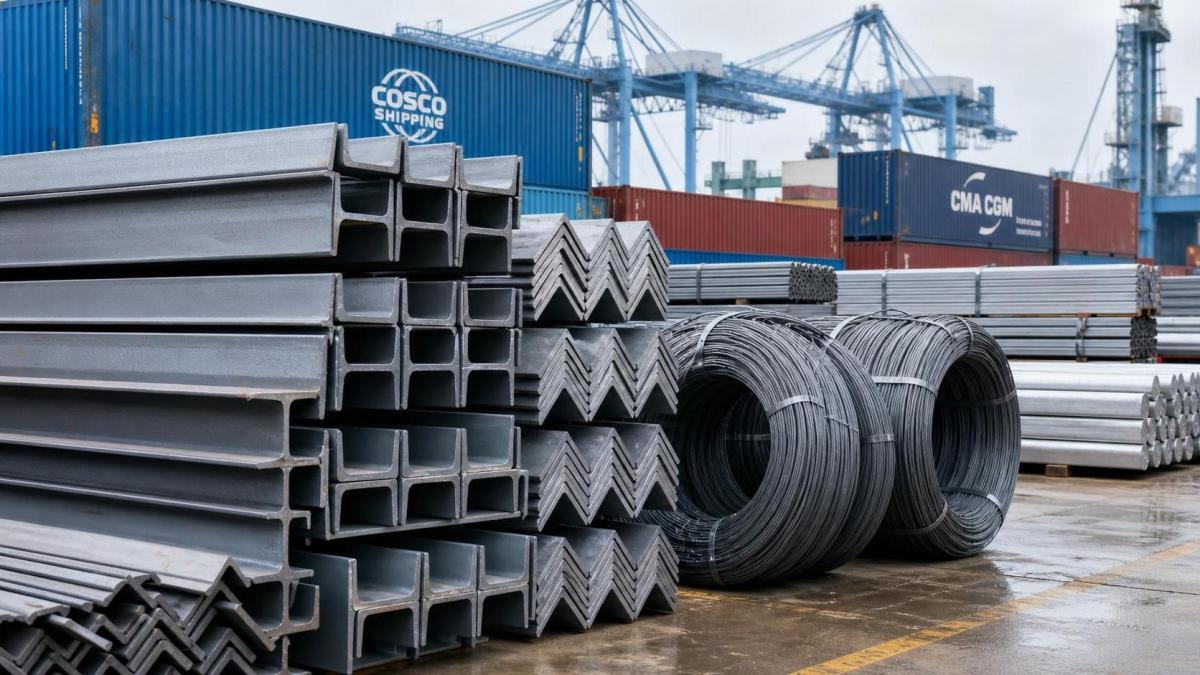
On July 1, 2026, the EU moved the steel segment of CBAM into a fuller transitional reporting stage, requiring Chinese exporters of steel and section products to submit quarterly reports on embedded carbon emissions. The change matters beyond customs paperwork: it directly touches export execution, buyer-side supply chain compliance, import cost estimation, and the way supplier qualification is reviewed for products such as H-beams, angle steel, channel steel, and wire rod.
What Has Taken Effect From July 1
According to the provided event information, from July 1, 2026, the EU CBAM entered a full transitional phase for the relevant steel trade. Chinese exporters shipping steel and section products to the EU, including H-beams, angle steel, channel steel, and wire rod, are required to file quarterly reports on embedded carbon emissions.
The same information states that non-compliant reporting may affect customs clearance and later access under the formal phase. It also states that the mechanism is directly linked to overseas buyers' supply chain compliance responsibilities, import cost assessment, and supplier qualification review procedures.
Where The Pressure Will Be Felt First
Export transactions now carry an added reporting burden
Direct exporters are likely to feel the impact first because the reporting obligation is tied to goods entering the EU market. The immediate business effect is not only document submission, but also whether shipment files, internal records, and product-level emissions information can support quarterly declarations in a consistent manner. What deserves closer attention is that the risk described in the event summary is operational as well as commercial, since non-compliance may affect clearance and later market access.
Overseas procurement teams will tighten supplier review
Buyers and sourcing teams may need to treat carbon reporting capability as part of supplier screening rather than as a separate afterthought. From an industry perspective, this can influence supplier onboarding, ongoing qualification checks, and requests for supporting documentation during procurement cycles. For businesses supplying EU-linked customers, the practical issue is whether they can provide data and records in a form that procurement and compliance teams can actually use.
Manufacturing and processing links may face new data requests
Processing manufacturers and upstream production links may be affected because exporters cannot complete quarterly reporting without emissions-related inputs tied to the products being shipped. Analysis shows that this may increase attention on internal traceability, production records, and the consistency of technical or compliance documents that accompany export orders. The event summary does not provide detailed execution rules, so this should be understood as a likely compliance pressure point rather than a confirmed enforcement outcome.
Supply chain service providers may need to adjust handoff processes
Service providers involved in export documentation, shipment coordination, and delivery scheduling may also be affected where reporting status becomes relevant to customs timing or customer acceptance. Observably, once quarterly reporting becomes part of the trade workflow, coordination failures between exporter, manufacturer, and buyer can turn into delivery risk even when the physical goods themselves are ready to ship.
Practical Points Companies Should Watch Now
Whether current documents can support quarterly reporting
Companies should review whether existing trade and technical files can support recurring embedded carbon reporting for steel exports to the EU. This is not limited to a single form; it concerns whether the underlying product information, internal records, and supporting materials can remain aligned from shipment to shipment.
How supplier qualification criteria may change
Because the event summary directly links CBAM reporting to supplier qualification review, exporters and manufacturers should watch for changes in customer audit questions, vendor registration requirements, and bid or purchase documents. Analysis shows that the issue is less about a one-time declaration and more about whether compliance capability becomes part of routine commercial evaluation.
How the rule affects timing, cost planning, and delivery commitments
The summary also links the mechanism to import cost estimation and customs outcomes. Companies with EU-facing orders should therefore pay attention to whether reporting preparation changes lead times, internal approval steps, or cost assumptions used in quotations and procurement planning. The available information does not confirm a uniform market response, so this remains a point for close monitoring rather than a fixed conclusion.
What still needs verification in execution practice
Businesses should continue to watch for further official wording, practical filing interpretation, and changes in customer-side compliance expectations. From an industry perspective, the current event confirms the reporting obligation and its relevance to access and clearance, but it does not by itself settle every execution detail for documentation standards, review thresholds, or downstream contract language.
How This Signal Should Be Read
Analysis shows that this development is more than a policy headline and less than a fully closed compliance picture. It is more appropriate to understand this as a concrete execution signal: reporting obligations for relevant steel exports are no longer an abstract future issue, and they now sit closer to shipment, procurement, and supplier review decisions. At the same time, the market still needs to observe how individual buyers, service providers, and trade workflows absorb the requirement in day-to-day practice.
What This Means For The Market Right Now
At this stage, the main significance of the update is that carbon-related reporting has moved into the practical operating layer of steel exports to the EU. For exporters, manufacturers, and buyers, the immediate question is not only whether the rule exists, but whether internal data, supplier management, and delivery coordination can keep pace with it. A measured reading is that this is an implemented compliance change with direct trade relevance, while the exact market response and execution detail still require continued observation.
Basis Of This Article And What Still Needs Checking
This article is based on the user-provided news title, event date, and event summary. For developments of this kind, source types commonly associated with verification may include official announcements, regulatory publications, customs or trade authority information, industry association releases, standard-setting documents, and reporting by authoritative media.
No specific official source link was provided in the input, so the precise official reference still needs to be verified on an ongoing basis. Further observation is also needed on detailed policy interpretation, certification or compliance practices, procurement document changes, market feedback, and how companies implement the reporting requirement in actual export operations.
By clicking 'Allow All', you agree to the storage of cookies on your device to enhance site navigation, analyze site usage and assist with our marketing efforts.
Leave a message and we'll get back to you soon.