
— News Center
US Launches Sunset Review on China HR Coil AD Order

On July 8, 2026, the U.S. Department of Commerce formally opened the first sunset review of the anti-dumping duty order covering hot-rolled steel coil (HR Coil) from China. The current duty rates of 124.35% to 256.44% remain in place during this process, and exporters have been asked to submit updated export data and cost-structure documentation within 90 days. For steel traders, import-side buyers, processors, and supply chain service providers linked to U.S.-bound transactions, this is not just a procedural notice; it is a compliance and sourcing event that may shape customs cost assumptions, document readiness, and supplier substitution decisions over the coming period.
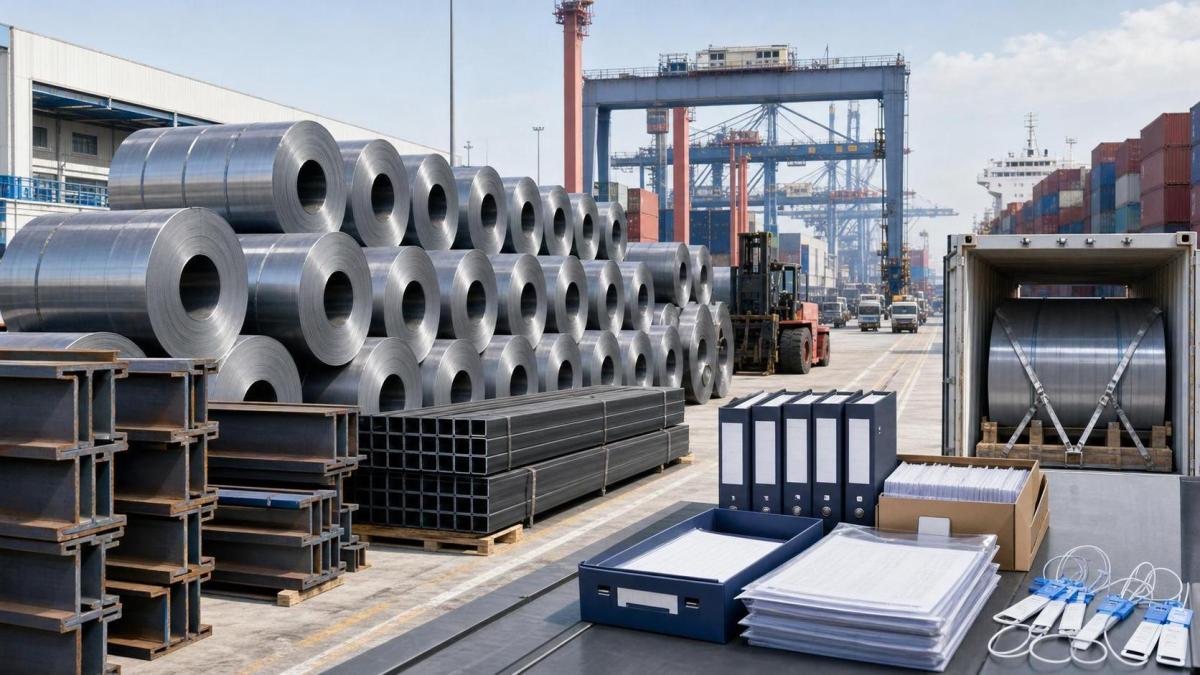
What the notice confirms at this stage
The confirmed facts are limited but commercially significant. The review was officially initiated on July 8, 2026, by the U.S. Department of Commerce and concerns the anti-dumping duty order on HR Coil originating in China. The proceeding is identified as the first sunset review of that order. The existing anti-dumping duty rates, stated at 124.35% to 256.44%, are being maintained at this stage. In addition, exporters are required to provide a new round of export data and proof of cost structure within 90 days. The stated practical importance of the review is that its outcome will directly affect the compliance path, customs clearance cost, and supply chain replacement decisions of U.S. importers purchasing China-origin structural steel-related products over the next five years.
Where the pressure is likely to appear in the trade chain
Import-side purchasing decisions may become more documentation-driven
From an industry perspective, U.S.-linked buyers and procurement teams may be affected because the review keeps the current duty burden visible while also reinforcing the need to evaluate future sourcing routes. The immediate impact is likely to be felt in landed-cost calculations, supplier screening, and purchasing timetable decisions. What deserves closer attention is whether procurement files, product descriptions, and shipment-related records are aligned with the compliance requirements surrounding continued anti-dumping exposure.
Chinese exporters face a tighter proof burden during the review window
Analysis shows that exporters are directly exposed because the notice specifically requires updated export data and cost-structure proof within 90 days. The key business impact is therefore not only commercial pricing but also file completeness, internal cost traceability, and consistency across trade documents. Export-oriented companies should pay close attention to how commercial invoices, cost records, and supporting trade documentation are prepared and retained during the review period.
Processors and downstream users may need to reassess sourcing continuity
For processors and manufacturing users relying on imported steel inputs, the issue is less about headline policy and more about execution risk in supply continuity. Observably, continued high duty rates can affect order planning, replacement sourcing assessments, and delivery scheduling tied to U.S.-market demand. The operational focus is likely to shift toward supplier qualification, alternative supply evaluation, and timing risk around orders that depend on stable import treatment.
Logistics and customs service providers may see higher compliance sensitivity
Supply chain intermediaries, including customs and trade service providers, may also be affected because the review raises the importance of accurate classification support, document consistency, and customs-cost forecasting. Their exposure is concentrated in shipment preparation, customs filing support, and client advisory work on trade compliance risk. In practice, this means closer review of transaction records and stronger coordination between exporters, importers, and service partners.
Practical points companies should track now
Focus on the 90-day submission requirement
Analysis shows that the clearest near-term operational change is the request for exporters to submit updated export data and cost-structure proof within 90 days. Companies involved in these transactions should treat document readiness as an active workstream rather than an administrative afterthought.
Recheck landed-cost and sourcing assumptions
Because the current duty rates remain in place during the review, procurement and trade teams should revisit cost models tied to U.S.-bound steel purchases. This is especially relevant where contract pricing, margin assumptions, or delivery commitments were built around stable import economics.
Watch for changes in official wording and execution practice
It is more appropriate to understand this stage as an active review signal rather than a fully settled new enforcement framework. Companies should therefore monitor whether later official statements, transaction-facing guidance, or downstream commercial documents reflect any narrower or broader interpretation in execution.
Check supplier files and transaction support materials
What deserves closer attention is the quality of supporting materials behind trade flows, including export data, cost evidence, and related commercial documentation. Even where no final new outcome has yet been announced, weak file discipline can create practical exposure in customs, procurement approval, or supplier continuity decisions.
Why this reads as an execution signal, not just a routine notice
Observably, this development matters because it combines two elements: continued high anti-dumping duty rates and a formal request for updated exporter submissions. That combination makes the event more than a passive procedural milestone. At the same time, analysis shows that it should not yet be overstated as a completed policy reset. The market still needs to observe how the review proceeds, how participants respond, and whether procurement, compliance, and bidding documents begin to reflect a firmer shift in sourcing expectations.
How the market is likely to interpret this stage
At this point, the most balanced reading is that the review serves as a concrete compliance and trade-planning signal for companies connected to U.S.-bound HR Coil transactions involving China-origin supply. The confirmed facts already matter for documentation, cost planning, and sourcing decisions, but the longer-term commercial effect still depends on how the review develops and how market participants adjust. It is more appropriate to understand this as a live rule-development process with immediate operational relevance, rather than as a fully concluded new market outcome.
Basis of this article and what still needs verification
This article is based on the user-provided news title, event date, and event summary. For events of this type, relevant source categories typically include official announcements, releases from regulatory authorities, customs or trade administration updates, industry association communications, standard-setting documentation, and reporting by authoritative media. No specific official source link was provided in the input, so the exact official publication path still requires follow-up verification. Observably, the areas that still merit continued tracking include any later official clarification, execution wording, procurement-document changes, market feedback, and how affected companies implement the required submissions and related compliance steps.
By clicking 'Allow All', you agree to the storage of cookies on your device to enhance site navigation, analyze site usage and assist with our marketing efforts.
Leave a message and we'll get back to you soon.