
— News Center
US Begins Sunset Review of China HRC Dumping Order

On July 18, 2026, the U.S. Department of Commerce opened an expedited sunset review of the antidumping duty order on hot-rolled coil (HRC) from China. The review centers on whether the current 12.5% to 42.3% antidumping duties should remain in place, with a result expected in January 2027. For exporters, import-side distributors, procurement teams, and supply chain service providers, this is not just a procedural update; it is a live trade-rule development that can affect compliance planning, price formation, and customs clearance arrangements over the next 18 months.
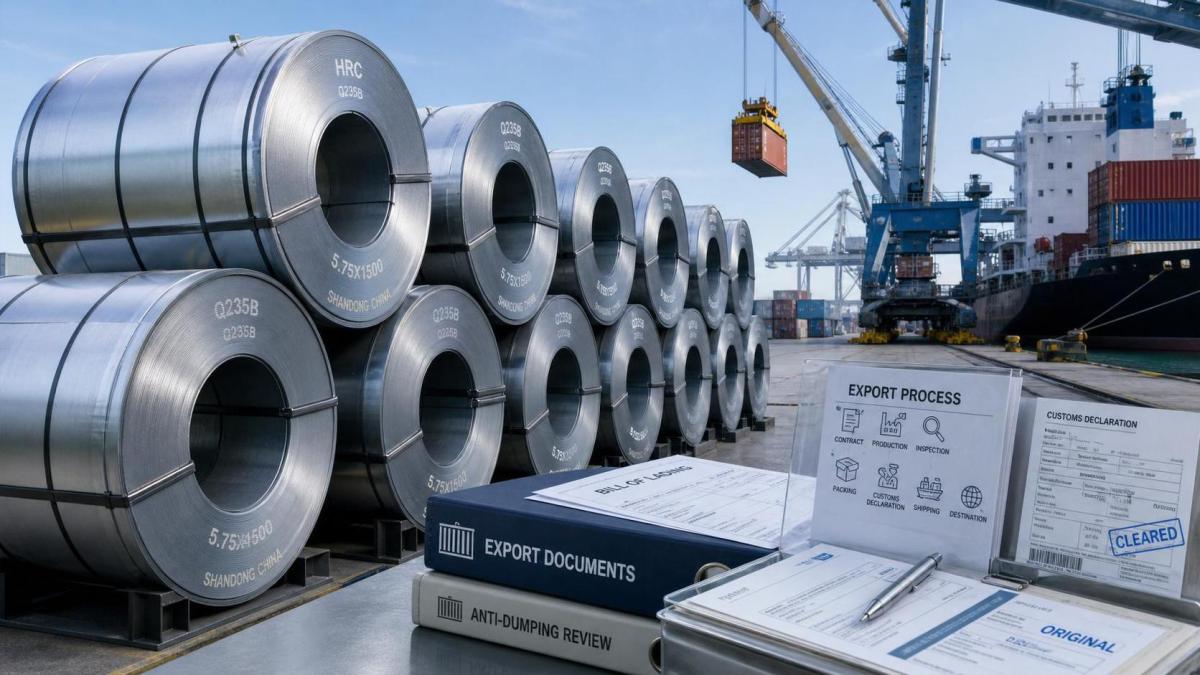
What Has Been Formally Put Into Review
The confirmed fact is that the U.S. Department of Commerce issued a notice on July 18, 2026, formally starting the first expedited sunset review of the antidumping duty order covering hot-rolled coil from China. The review will determine whether the existing antidumping duty rates of 12.5% to 42.3% continue to apply. Based on the information provided, the review outcome is expected in January 2027, and that outcome will directly affect the compliance path, pricing strategy, and customs clearance planning tied to Chinese steel exports to the U.S. market.
Where the Trade Rule Change May Be Felt First
Export transactions face a renewed compliance checkpoint
From an industry perspective, Chinese exporters of HRC are likely to feel the most immediate effect because the review reopens uncertainty around whether current duty treatment will continue. The practical impact is concentrated in export planning, offer validity, contract timing, and shipment preparation. What deserves closer attention is whether internal trade documentation, product descriptions, and shipment files are organized well enough to support consistent compliance handling during a period of regulatory review.
Pricing and purchasing decisions may require shorter review cycles
For buyers and procurement teams that rely on HRC supply connected to the U.S. market, the issue is less about a new rule already taking effect and more about how a pending decision influences near-term purchasing behavior. Analysis shows that quotation structures, landed-cost assumptions, and procurement schedules may need more frequent reassessment while the review remains open. Companies involved in sourcing should watch for changes in how suppliers frame delivery terms, validity periods, and trade-risk allocation.
Distributors and customs-facing operators may need tighter file control
For distributors, traders, and supply chain service providers handling customs clearance arrangements, the review matters because duty continuity or change can affect import-side execution. Observably, the most exposed business steps are document readiness, customs filing coordination, and handoff timing between seller, consignee, and service providers. Firms in these roles should pay particular attention to record consistency across commercial documents and any updates in official wording or enforcement interpretation as the review progresses.
What Companies Should Track During the Review Window
Watch official language, not just headlines
Analysis shows that the key issue is not only the existence of the review, but how official statements describe its scope, timing, and resulting treatment of the current duty order. Companies should continue monitoring formal announcements and any later clarifications that may shape how the market interprets the review timeline and compliance expectations.
Recheck quotation logic and contract assumptions
Because the current duty range under review is 12.5% to 42.3%, firms involved in cross-border pricing should revisit how they present offers tied to the U.S. market. What deserves closer attention is whether quotations, validity periods, and delivery commitments adequately reflect the possibility of continued duty exposure before the review result is known.
Prepare documentation for execution rather than debate
Where execution risk usually emerges is not in public discussion of the review itself, but in day-to-day transaction files. Exporters, distributors, and service providers should examine whether product records, commercial paperwork, technical descriptions, and customs-facing documents are aligned well enough to support smoother handling if scrutiny increases during the review period. This should be understood as a compliance preparation point, not as evidence of any new enforcement outcome already in place.
Align shipment and clearance planning with the review calendar
With the result expected in January 2027 and the event described as affecting the next 18 months of export compliance and distribution arrangements, companies should pay attention to shipment timing and clearance planning. Observably, this is most relevant for orders that may span the review window, where delivery sequencing and import coordination can become more sensitive to rule continuity.
How This Signal Should Be Read at This Stage
Analysis shows that this development is better understood as an active regulatory signal rather than a completed rule outcome. The review has been launched, but the final decision on whether the existing antidumping duties remain in force is still pending. From an industry perspective, the immediate meaning lies in the return of trade-policy uncertainty to a specific product flow, which tends to influence compliance behavior and commercial caution before any final determination is published.
It is also more appropriate to understand this as a process with execution implications, especially for pricing discipline and customs preparation, rather than as a confirmed shift in market access conditions today. That distinction matters because companies that treat the review as a settled result may overstate or understate their actual trade exposure.
Why the Market Will Keep Watching This Review
The importance of this case lies in its practical effect on how HRC shipments to the U.S. market are planned, priced, and cleared while the review is underway. A rational reading is that the event does not yet establish a new trade condition, but it does create a defined decision window that market participants cannot ignore. At this stage, it is more appropriate to treat the development as a rule-related process in motion, with real implications for compliance and transaction management, while reserving judgment on the final outcome until the review result is released.
Basis of This Article and What Still Needs Verification
This article is based on the user-provided news title, event date, and event summary concerning the July 18, 2026 initiation by the U.S. Department of Commerce of an expedited sunset review of the antidumping duty order on hot-rolled coil from China. For developments of this kind, commonly relevant source types include official notices, releases from regulatory or trade authorities, customs or trade administration information, industry association updates, standard-setting documents, and reporting by authoritative media. A specific official source link was not provided in the input, so that link still needs to be verified on an ongoing basis.
Further observation is still required on later official wording, any clarification of implementation approach, possible changes in procurement or bidding documents, market feedback from affected trade participants, and how companies adjust pricing, compliance, and clearance execution during the review period.
By clicking 'Allow All', you agree to the storage of cookies on your device to enhance site navigation, analyze site usage and assist with our marketing efforts.
Leave a message and we'll get back to you soon.