
— News Center
US Starts Review of China Hot-Rolled Sections

On August 9, 2026, the U.S. Department of Commerce announced the start of the fifth annual antidumping duty review covering hot-rolled steel sections from China under HS 7216.50. A new cash deposit rate is expected to be determined by September 15, 2026, making this a closely watched development for U.S. importers, buyers of structural steel sections, and supply chain participants handling H-beams, angle steel, and channel steel. The reason this matters now is practical: any adjustment to deposit rates can quickly affect customs costs, procurement timing, and the pace at which existing orders move forward.
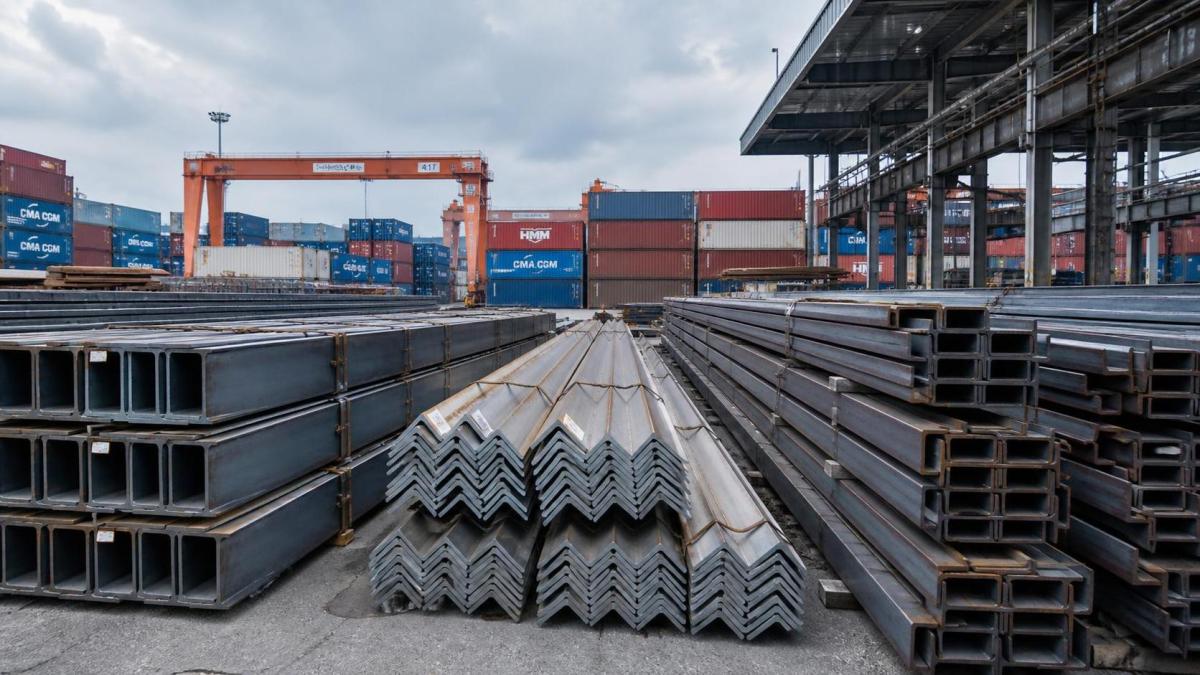
What the official notice confirms at this stage
The confirmed facts are limited but commercially significant. The review was announced on August 9, 2026, and it concerns the fifth annual review of the antidumping duty order on Chinese hot-rolled steel sections classified under HS 7216.50. According to the information provided, the U.S. Department of Commerce is expected to determine new cash deposit rates by September 15, 2026.
The products most directly associated with this development include mainstream structural sections such as H-beams, angle steel, and channel steel. The information provided also indicates that the review outcome may raise cash deposit rates for some suppliers to a range of 18.7% to 32.4%.
Where the immediate business pressure is likely to appear
Import decisions may tighten first
From an industry perspective, U.S. importers are among the first affected because cash deposit changes feed directly into customs clearance costs. The impact is not only on landed cost calculations, but also on the timing of purchase confirmations, shipment planning, and whether previously acceptable price offers remain workable.
Procurement teams will need to reassess order rhythm
Buyers sourcing H-beams, angle steel, and channel steel may face a shorter decision window as the expected September rate determination approaches. Analysis shows that the main pressure point is the procurement cycle itself: companies may need to revisit quotation validity, budget assumptions, and the sequencing of orders that are sensitive to deposit-related cost shifts.
Order execution and distribution could become less predictable
For distributors, processors, and other downstream market participants, the issue is not only price competitiveness but also execution rhythm. If some suppliers face higher deposit rates, order scheduling and supply continuity may become harder to predict, especially where transactions depend on narrow margins or fixed delivery expectations.
Service providers around trade operations should watch documentation and timing
Supply chain service providers, including those involved in customs and shipment coordination, may see increased attention on classification, supplier-specific exposure, and filing timelines. Observably, the operational risk here lies in how quickly commercial terms may need to be adjusted once the new deposit rates are set.
What companies should monitor before the new rate is set
Track the next official wording carefully
What deserves closer attention is the exact wording of subsequent official updates leading up to the expected September 15, 2026 determination. In practice, small changes in official language can matter for how companies interpret rate application, supplier exposure, and near-term import planning.
Focus on product scope tied to HS 7216.50
Companies dealing in structural sections should pay close attention to product scope within HS 7216.50, especially where H-beams, angle steel, and channel steel are involved. The key practical issue is whether current and upcoming orders fall directly into the affected category and therefore face revised cash deposit treatment.
Separate policy movement from executed business impact
Analysis shows that the announcement itself is a policy and compliance development, while the business impact depends on how the new rates are ultimately applied. Companies should therefore distinguish between the start of the review and the actual effect on pricing, clearance cost, and delivery commitments once the rate determination is issued.
Prepare contract and communication checks
Importers, suppliers, and downstream buyers should review quotation periods, delivery schedules, customs-related documentation, and customer communications connected to open orders. The practical reason is straightforward: if deposit rates rise for certain suppliers, even unchanged product demand may not prevent disruptions in execution timing or price discussions.
Why this is a signal to watch, not yet a final market outcome
It is more appropriate to understand this as an active policy development with immediate commercial relevance rather than as a concluded market result. The review has started, and the expected timing for a new cash deposit rate gives the market a defined near-term checkpoint. At the same time, the provided information does not establish a final outcome for all suppliers or all transactions. From an industry perspective, the current significance lies in the narrowing decision window for affected trade flows.
Observably, this development carries both short-term and continuing implications. In the short term, it may alter procurement timing and customs cost planning. As a longer signal, it reinforces the need for companies trading affected structural sections to treat trade remedy reviews as a live operational factor rather than a distant regulatory issue.
How this development is best understood for now
At this stage, the review should be read as a near-term pressure point for import cost management and order execution in the U.S. market for affected hot-rolled steel sections from China. The most balanced conclusion is not that the market outcome is already settled, but that the review has created a concrete period of uncertainty ahead of the expected September 15, 2026 rate determination. For companies exposed to these products, the priority is disciplined monitoring and operational readiness rather than broad assumptions.
Basis of this article and what still needs verification
This article is based on the user-provided news title, event date, and event summary concerning the U.S. Department of Commerce review of antidumping duties on Chinese hot-rolled steel sections. For reporting of this type, commonly relevant source categories include official government notices, company disclosures, industry association updates, authoritative media coverage, and standard or classification-related documents.
No specific official source link was provided in the input, so the precise official reference still needs ongoing verification. The main follow-up point to watch is the expected determination of new cash deposit rates by September 15, 2026, along with any further official clarification affecting product scope, supplier exposure, and business implementation.
By clicking 'Allow All', you agree to the storage of cookies on your device to enhance site navigation, analyze site usage and assist with our marketing efforts.
Leave a message and we'll get back to you soon.