
— News Center
U.S. Starts AD Review on Chinese Galvanized Steel

On July 28, 2026, the U.S. Department of Commerce announced the start of an annual anti-dumping review covering Chinese hot-dip galvanized steel sheet under HS 7210.49 and 7212.40. The case involves 23 Chinese exporters, and the expected ruling before August 15 has become an immediate point of attention for exporters, importers, supply chain service providers, and buyers tied to U.S.-bound shipments, because it may affect second-half pricing, customs documentation, and how L/C terms are set.
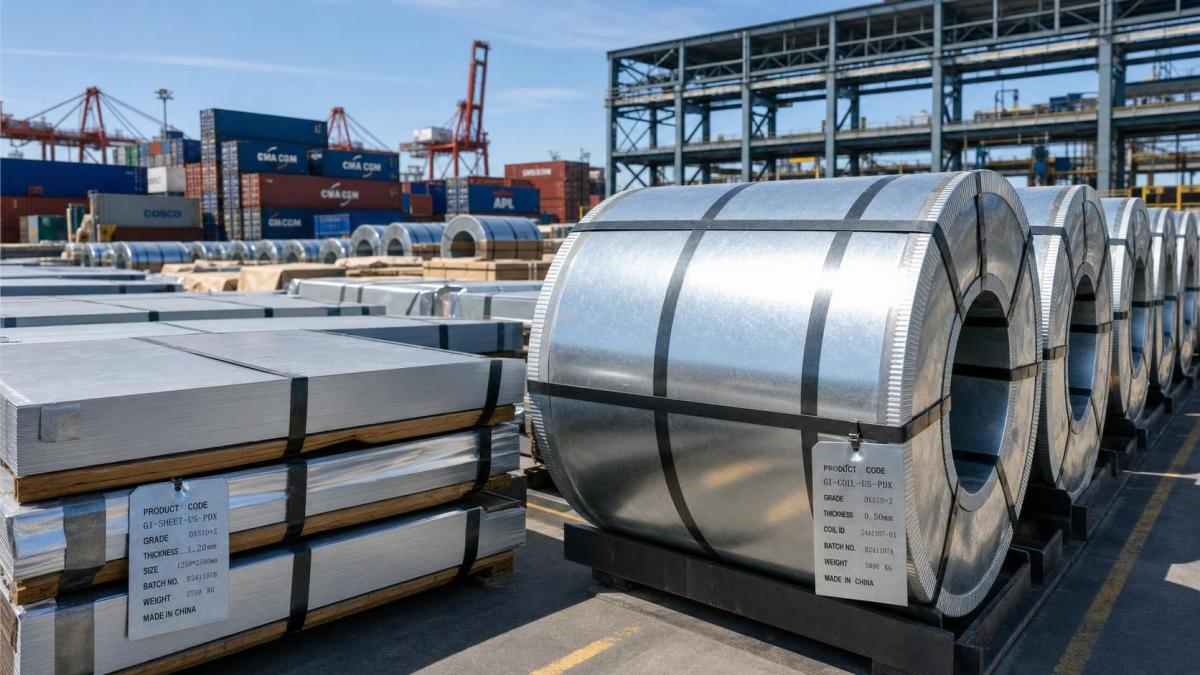
What the current review formally covers
According to the information provided, the review was initiated by the U.S. Department of Commerce on July 28, 2026 and applies to Chinese hot-dip galvanized steel sheet classified under HS 7210.49 and HS 7212.40. A total of 23 Chinese exporting companies are involved. The review is based on export data from October 2025 to March 2026. A new determination is expected before August 15, and new duty rates are set to apply from August 2026. The provided summary also indicates that anti-dumping margins for some companies may rise to 28.6% to 41.3%.
Where the pressure may show up first
Export quotations and trade execution
From an industry perspective, direct trading companies are likely to feel the impact first in U.S.-bound quotations. Because the ruling is expected in mid-August and may alter duty exposure, the risk is concentrated in offers for second-half deliveries, contract pricing, and shipment timing. What deserves closer attention is whether quoted terms leave enough room for duty-related adjustments once the new rates are applied.
Customs and document preparation
For customs-facing teams and service providers, the practical issue is not only tariff cost but also document readiness. The provided information specifically points to customs clearance documentation as an affected area, which means exporters, importers, brokers, and logistics coordinators need to watch product classification, supporting paperwork, and origin-related compliance paths more closely during execution.
Procurement and downstream manufacturing exposure
Analysis shows that procurement teams and manufacturers relying on these product flows may face uncertainty in landed cost calculations and delivery planning. Even without a final ruling yet, the review creates a short decision window for buyers that source galvanized steel sheet tied to the U.S. market, especially where pricing commitments, replenishment schedules, or customer pass-through arrangements are already in motion.
Banking and settlement terms
The summary also identifies L/C term setting as an area of direct impact. For traders and counterparties using documentary payment structures, this raises a practical need to revisit clauses linked to shipment dates, document consistency, and responsibility for tariff-related changes. The business effect may therefore extend beyond product cost into settlement execution and dispute prevention.
What companies should monitor now
Watch the wording of the upcoming determination
Companies involved in U.S.-related shipments should pay close attention to the wording of the expected decision before August 15. The key point is not only whether rates move higher for some exporters, but how the applicable scope, timing, and implementation details are expressed in the official ruling.
Recheck shipment schedules against August implementation
Because the new rates are set to apply from August 2026, businesses should review orders, shipment windows, and delivery commitments that fall around the implementation period. This is particularly relevant where pricing was agreed earlier but customs entry or payment milestones will occur after the new rates take effect.
Prepare customs and origin-related files with less room for error
Observably, the review raises the importance of cleaner supporting documentation. The provided summary specifically flags customs paperwork and origin compliance paths, so exporters and their service partners should verify whether current files, declarations, and supplier-side records can support the transaction structure they intend to use.
Assess alternatives without assuming a final outcome
It is more appropriate to understand immediate supply chain substitution and origin-path assessment as contingency work rather than a confirmed necessity in every case. Still, the information provided indicates that companies should begin that assessment now, because the review may materially change the cost and compliance position for certain exporters.
Why this is a signal, not yet the final market outcome
Analysis shows that this development should be read first as an actionable policy and trade execution signal rather than a fully settled market result. The review has formally begun, the affected product scope and review period are known, and timing is close enough to influence contracts and operational planning. At the same time, the final determination is still pending, so the market impact remains partly contingent on the exact ruling and how businesses adjust their pricing, documentation, and sourcing decisions afterward.
How to read the development at this stage
At this stage, the industry significance lies in the narrowing decision window. The case is concrete enough to require operational preparation, yet still open enough that companies should avoid treating every possible cost increase as already fixed. It is more appropriate to understand this as a near-term trade compliance and execution development with broader implications for second-half U.S.-bound galvanized steel business, while continued observation remains necessary until the new determination is issued.
Basis of this article and what still needs verification
This article is based on the user-provided news title, event date, and event summary. For developments of this type, the most relevant source categories usually include official government notices, company disclosures, industry association updates, authoritative media reporting, and trade or standards-related documentation. A specific official source link was not provided in the input, so the exact text of the underlying notice still requires ongoing verification. The main follow-up point to monitor is the expected determination before August 15 and any resulting clarification on duty application, documentation practice, and transaction execution.
By clicking 'Allow All', you agree to the storage of cookies on your device to enhance site navigation, analyze site usage and assist with our marketing efforts.
Leave a message and we'll get back to you soon.